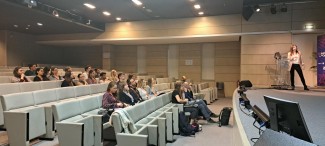
Speaker : Ana FRANCHESCHI, Director of Dementia Imaging and Director of Molecular Neuroimaging at Barbara and Donald Zucker School of Medicine at Hofstra/Northwell
"Novel Imaging Biomarkers for Dementia Therapeutics"
Speaker : Pierre-Yves OUDEYER, Research director at Inria Center of University of Bordeaux
"Curiosity in human development: theories, experiments and applications in AI and education"

The CLARA Symposium on AI for Brain Health will bring together researchers, clinicians, and experts from neuroscience, artificial intelligence, molecular biology, clinical research, data science, and high-performance computing. The event will examine how artificial intelligence can advance brain research, support biomedical innovation, and contribute to better brain health.
Speaker : Julie DUQUE, Institute of Neuroscience, Université catholique Louvain
"Probing arousal causally with taVNS: from resting motor excitability to decision and movement"
Speaker: Raul RABADAN, Center for Computational Biology and Bioinformatics, Columbia University College of Physicians and Surgeons
Speaker : Ewelina KNAPSKA, Necki Institute of Experimental Biology
"Psychedelics in context: chronic stress, social competition and recovery"