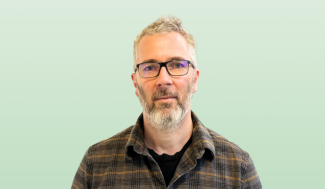
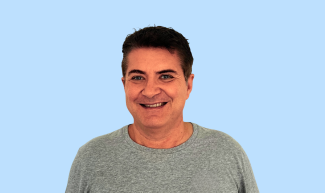
Emmanuel Flamand-Roze is a neurologist at Pitié-Salpêtrière Hospital and co-leader of the Mov’it team at Paris Brain Institute. Emmanuel’s mission is to humanize medicine. He set up The Move, an innovative program aimed at medicine students.
Tell us about your background
I completed my training as a medical doctor at Paris Cité University in 2003, before gaining a doctorate in sciences at Sorbonne University in 2007.I went on to obtain authorization to supervise research in neuroscience.
Since 2010, I have been a neurologist in the neurology department at Pitié-Salpêtrière hospital, after an internship and registrarship in hospitals in Paris.I specialize in movement disorders, particularly in children. I set up the JUMP program at Pitié-Salpêtrière hospital to help adolescents with chronic neurological conditions transition to adult services.
I now co-lead a research team at Paris Brain Institute dedicated to movement disorders and how they interact with cognitive processes. We study clinical aspects, genetic causes, and pathophysiological mechanisms, and we explore new therapeutic approaches.
I have so far co-authored more than 350 scientific papers on these topics.
Since 2022, I have also been chair of the pediatrics special interest group of the International Parkinson and Movement Disorders Society and a member of both France’s board of neurology teachers and the national board of universities specializing in neurology.
You really believe in the importance of education. Can you tell us about the “The Move” program?
Yes, education is something very close to my heart. That’s why I designed “The Move”, an innovative program for medicine students, to offer a different way of teaching them neurological semiology.
Neurology is often seen as one of the most challenging disciplines, and at the same time, medical needs in this area are growing. With “The Move”, we took our inspiration from the concept for the show “The Voice”. But instead of singing, the students mime neurological symptoms in role-play scenarios. This simulation makes learning experiential, fun, joyful and above all memorable.
Several scientific publications have demonstrated the efficacy of this program on students’ motivation and performance. We have also proven that it helps fight “neurophobia”, in other words, fear of neurology. On the strength of these results, “The Move” is now recommended by France’s board of neurology teachers and is even included in their official tutorials so that it can be rolled out in other universities.
How exactly do these sessions work?
Second-year medicine students take part in small group workshops that make up The Move “season”. At the end of the season, they meet for a grand finale.
During the event, the groups compete in friendly “battles” where they present the mime-based sketches they have devised and rehearsed. After these presentations, a jury consisting of teachers selects the winning team based on two criteria: the neurological authenticity and the originality of the scenario.
Beyond the technical aspects, this learning experience offers a valuable opportunity for interaction between all participants. This enables them to develop their empathy, to learn to put themselves in patients’ shoes, all while taking part in training without disturbing patients. It is also, in my opinion, a joyful and constructive way of countering the ableism that exists in our society. We show the disease, and we can also laugh about it, just as we laugh about other things in life.
“The Move” program has now been brought to an international audience. Can you tell us about what happened in the 2025 edition that has just taken place?
Yes, since 2017 we have been fortunate enough to receive support from the Fondation Hippocrène, which has enabled us to transform “The Move” into an international event for a wider audience, backed by Sorbonne University and Paris Brain Institute.
For the 2025 edition, which took place in Strasbourg thanks to support from the university hospitals, seven teams from three continents competed. This time, the team from Sao Paulo (Brazil) won the event, thanks to the neurological quality of their sketches and the originality of their simulations. The jury were particularly impressed by how students simulated the effects of neurological impairments in everyday life.
The prize for the best sketch was awarded to the team from Hanoi, the prize for the best costumes to the team from Nancy, and special jury prizes were awarded to Lausanne and Strasbourg. For us, it is immensely satisfying to see this project shared with a wider audience and become a regular event. It creates a space for young doctors around the world to come together, and an opportunity for “healthcare democracy”, enabling patients and the public to participate in discussions about healthcare.
You also have a podcast. What is it about?
In 2022, I co-created a medical humanities podcast with Olympe de Gê called “Le serment d’Augusta (The Oath of Augusta)”, which aims to reinvent the caregiver-patient relationship.
This podcast is part of students’ healthcare training at Sorbonne University. It received an award from Sorbonne University and, most recently, in May 2025, the main prize at the French language health podcasts festival. We have just exceeded 400,000 listens.
For me, it’s another way of humanizing medicine, of examining our practices and of putting patients’ voices back at the heart of care.
The team aims to investigate various aspects of motor and cognitive control, particularly inter and intra-subject variability in developmental and acquired disorders and in genetically related animal models.
Read more