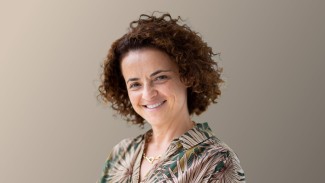
As a medical writer within the Neurotrials team, Paris Brain Institute’s early clinical development unit, Julien Serusclat uses his writing skills for the benefit of the scientific community. He develops the essential documents used in clinical trials, a role which brings together his in-depth understanding of science and regulations, and his skills as a writer. His goal is to transform complex scientific research into clear and accurate information, to help advance brain research.

Tell us about your background
I studied pharmacy at Châtenay-Malabry, now Paris-Saclay University, and learned about the science that transforms substances from nature into medicines.
After my studies, I went into industry and supplemented my pharmacist qualification with a master’s degree in the development and registration of medicine and health products. This field is at the intersection of science and regulations, and guides the strategy for developing a treatment in order to assess its benefit-risk balance, from in vitro and animal research to clinical trials. It also involves the design of manufacturing and inspection processes.
I went on to work in regulatory affairs, primarily on products in clinical development. I helped to prepare clinical trial approval documentation, scientific opinions, responses to regulatory bodies and market entry authorization documentation. This work took me to France, Switzerland and the United Kingdom, firstly within large pharmaceutical groups and then with a biotech company developing stem cells for neurological indications.
In 2020, a few weeks before the first COVID pandemic lockdown, I joined Paris Brain Institute as a medical writer for the Neurotrials team.
What does a medical writer do?
The work of a medical writer can be incredibly varied, depending on the target audience. Within the Neurotrials team at Paris Brain Institute, my role focuses on the medical writing of regulatory documents. I write the key documents for clinical trials: protocols, investigator’s brochures, technical papers, study reports, etc.
In practical terms, my work requires in-depth analysis of several sources: scientific literature, confidential or unpublished technical data on the health product being studied, and regulatory guidelines. I work with different stakeholders—the laboratory sponsoring the study, clinical investigators and statisticians—to understand their individual needs and challenges. The writing stage comes after these discussions and scientific review. I have to select the key information, structure the ideas and communicate them in clear and accessible writing.
This work requires analytical skills and the ability to extract the key information, as well as always ensuring that scientific thinking and factual data are accurately articulated. But it all starts with a clear understanding of the message that needs to be conveyed. As Boileau said: “Whatever we well understand we express clearly, and the words flow with ease” .
The wide range of projects and subject areas, particularly around neurological and psychiatric diseases, makes this work both demanding and particularly stimulating.
What does Neurotrials do?
Neurotrials is a department within Paris Brain Institute that offers the traditional services of a CRO (Contract Research Organization). We specialize in designing and conducting early clinical trials in neurology and psychiatry.
Our mission is to support manufacturers (pharmaceutical laboratories, biotechs, medtechs or digital health stakeholders) in developing their products. This includes the design and management of clinical trials, as well as providing scientific, medical and regulatory advice to guide strategic choices from the earliest stages of development.
Our team includes experienced professionals from academia and industry. Our mission is to contribute to the development of new treatments for the benefit of brain disease patients, by ensuring projects’ scientific quality, clinical relevance and operational feasibility.