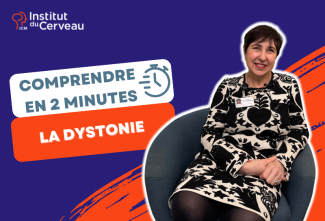
Dystonia is a disease of the movement that is still unknown, although it affects many people in many different forms. It is characterized by an alteration of voluntary movement: gestures become involuntarily disturbed, constrained or abnormal. Unlike a simple transient muscle pain, dystonia is a long-term condition requiring appropriate management.
Dystonia: an impairment of voluntary movement
Dystonia is not a paralysis but a disturbance of movement control. People with the disease may perform a gesture, but it is distorted, slowed down or accompanied by involuntary contractions.
Some forms are well known to the general public, such as writer’s cramp, which prevents normal writing, or neck dystonia, called spasmodic torticolis. Unlike a classic torticollis associated with transient pain, this form is chronic and persistent. It leads to an abnormal position of the head, which is difficult to control.
In these situations, patients often feel at an early stage that "something is wrong." A gesture becomes difficult, a posture appears to be blocked, or a usually simple movement requires unusual effort.
Various forms, sometimes from childhood
Dystonia can take many forms. Some remain localized to a part of the body, such as the hand or neck. Other, more severe forms can be generalized and affect several areas of the body.
These generalized forms often begin in childhood and tend to evolve over time. In some cases they are linked to a genetic origin, but for a large proportion of patients the cause remains unknown. Idiopathic dystonia, a medical term that simply means that the origin of the disease is not identified.
There are also rarer cases of dystonia occurring after certain situations, such as recovery from a stroke or, historically, after the use of certain drugs that are now little used.
Despite this diversity, each form of dystonia remains relatively rare, making their study complex and requiring specialized expertise.
Diagnosis: recognizing the signs of dystonia
The diagnosis of dystonia is primarily based on careful clinical observation. The patient usually comes in because of unusual discomfort in movement or posture.
The doctor then relies on two essential elements:
- the patient's account, which describes the difficulties encountered in daily life;
- analysis of symptoms, including involuntary muscle twitching and abnormal postures.
The aim is to recognise the type of dystonia in order to adapt the management. This is crucial because treatments vary according to the location and severity of the disease.
Treatments for each form of dystonia
Management of dystonia depends on the type and intensity of symptoms. For localized shapes, such as those touching the hand or neck, a combined approach is generally proposed.
Rehabilitation by a specialist physiotherapist plays a central role. It allows you to relearn certain actions and improve motor control. The patient is also encouraged to practise self-rehabilitation, by repeating the exercises on a daily basis.
This approach is often complemented by local botulinum toxin treatment. Injected into the affected muscles, it reduces excessive contractions. By relaxing overactive muscles, it restores the ability of other muscles to function properly and restore better harmony of movement.
In more severe forms, especially generalized forms, another solution can be considered: deep brain stimulation. This technique involves implanting electrodes in certain areas of the brain to modulate the activity of neural circuits. Although similar to that used in Parkinson's disease, it targets different brain regions.
Research at the Heart of Dystonia
At the Brain Institute, a specialized team called MOV'IT is dedicated to the study of dystonia. Researchers are exploring the brain circuits involved in this pathology in order to better understand their dysfunction.
Their objective is twofold:
- identify the areas of the brain responsible for movement abnormalities;
- develop strategies to modulate these circuits and improve symptoms.
To do this, they rely on complementary approaches, ranging from brain imaging to physiology, to the evaluation of treatments such as deep brain stimulation.
This research is conducted in collaboration with international teams, allowing for cross-fertilization of data and acceleration of discoveries. Patient involvement is also essential: it contributes directly to advancing knowledge and developing new therapeutic solutions.
Dystonia
Dystonia is a rare disease affecting around 20,000 people in France, most of whom are women. Onset can occur at any age and typically presents as long-lasting muscle contractions, resulting in abnormal postures and positions. There is a difference...
Read more