

Project Sponsor, MD, PhD, MCU-PH, Team Leader, PI, Sorbonne Université, AP-HP

Project Sponsor, MD, PhD, MCU-PH, Team Leader, PI, Sorbonne Université, AP-HP
Team presentation
The laboratory aims to understand genetic alterations and changes in the tumor microenvironment during the evolution of brain tumors, and to determine how these alterations influence tumor behavior and their response to treatments, with the goal of improving therapeutic strategies. To achieve this, the laboratory uses patient samples obtained from surgery as well as numerous preclinical in vitro and in vivo models.
Our research focuses on three main areas
- Improving the understanding of tumor heterogeneity in order to better predict patient prognosis and treatment response
- Identifying and targeting the mechanisms underlying treatment resistance in brain tumors
- Modulating interactions between tumor cells and the microenvironment to optimize new treatments, particularly immunotherapy
Some of the team’s flagship projects
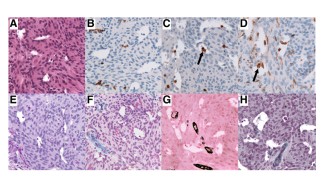
- Integrated study of brain tumors heterogeneity (glioblastomas, IDH-mutant gliomas, primary central nervous system lymphomas, and rare tumors), combining multi-omics analyses (genetic, epigenetic, transcriptomic, histomic), exploration of interactions with the tumor microenvironment, and development of innovative tools in advanced imaging and artificial intelligence (Leaders: Agusti Alentorn, Franck Bielle, Francesca Branzoli, Khê Hoang-Xuan)
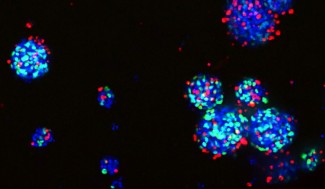
- Characterization of resistance mechanisms to chemotherapy and immunotherapy and development of new therapeutic strategies, particularly in glioblastoma, aimed at improving patient prognosis, using models such as patient-derived cell lines, xenografts, tumoroids, and organoids (Leaders: Ahmed Idbaih, Isabelle Le Roux, Mehdi Touat, Maïté Verreault)
- Study of interactions between tumor cells and their microenvironment, particularly myeloid and lymphoid cells and the vascular network, in order to identify predictive biomarkers of response and characterize therapeutic synergies (Leaders: Luis J. Castro-Vega, Ahmed Idbaih, Isabelle Le Roux, Michel Mallat, Marc Sanson, Mehdi Touat)
2025
- Kacimi S et al. Survival Outcomes Associated With First-Line Procarbazine, CCNU, and Vincristine or Temozolomide in Combination With Radiotherapy in IDH-Mutant 1p/19q-Codeleted Grade 3 Oligodendroglioma. J Clin Oncol . 2025 Jan 20;43(3):329-338.
- Nichelli L et al. Incorporation of Edited MRS into Clinical Practice May Improve Care of Patients with IDH-Mutant Glioma. AJNR Am J Neuroradiol. 2025 Jan 8;46(1):113-120. doi: 10.3174/ajnr.A8413.
- Hernández-Verdin I et al. Gut microbiome modulates the outcome in primary central nervous system lymphoma patients undergoing chemotherapy: An ancillary study from the BLOCAGE trial. Neuro Oncol. 2025 Sep 17;27(8):2090-2104.
- Morfouace M, Bielle Fet al. Molecular analysis of adolescent and young adult high grade gliomas in the SPECTA-AYA study: Poorly characterised tumours with frequent germline alterations. Eur J Cancer. 2025 Jun 18;223:115493.
2024
- Carpentier A et al. Repeated blood-brain barrier opening with a nine-emitter implantable ultrasound device in combination with carboplatin in recurrent glioblastoma: a phase I/II clinical trial. Nat Commun. 2024 Feb 23;15(1):1650.
2023
- Di Stefano AL et al. In Vivo 2-Hydroxyglutarate Monitoring With Edited MR Spectroscopy for the Follow-up of IDH-Mutant Diffuse Gliomas: The IDASPE Prospective Study. Neurology. 2023 Jan 3;100(1):e94-e106. doi: 10.1212/
- Salam R et al. Cellular senescence in malignant cells promotes tumor progression in mouse and patient Glioblastoma. Nat Commun. 2023 Jan 27;14(1):441. doi: 10.1038/s41467-023-36124-9.
- Hernández-Verdin I et al. Molecular and clinical diversity in primary central nervous system lymphoma. Ann Oncol. 2023 Feb;34(2):186-199.
- Lerond J, Mathon B, et al., Navarro V, Bielle F. Hippocampal and neocortical BRAF mutant non-expansive lesions in focal epilepsies. Neuropathol Appl Neurobiol. 2023 Oct;49(5):e12937.
2022
- Verreault M et al. Identification of growth hormone receptor as a relevant target for precision medicine in low-EGFR expressing glioblastoma. Clin Transl Med. 2022 Jul;12(7):e939.
2020
- Touat M et al. Mechanisms and therapeutic implications of hypermutation in gliomas. Nature. 2020 Apr;580(7804):517-523
2018
- Rosenberg S et al. A recurrent point mutation in PRKCA is a hallmark of chordoid gliomas. Nat Commun. 2018 Jun 18;9(1):2371
- Labreche K et al. Diffuse gliomas classified by 1p/19q co-deletion, TERT promoter and IDH mutation status are associated with specific genetic risk loci. Acta Neuropathol. 2018 May;135(5):743-755.
Team members
Project Sponsor, MD, PhD, MCU-PH, Team Leader, PI, Sorbonne Université, AP-HP
Project Sponsor, MD, PhD, MCU-PH, Team Leader, PI, Sorbonne Université, AP-HP

Clinician, MD, PhD, PH, PI, AP-HP

Research Officer (CRCN), PI, INSERM

Clinician, MD, PhD, PU-PH, PI, Sorbonne Université, AP-HP

Project Sponsor, MD, PhD, MCU-PH, PI, Sorbonne Université, AP-HP

Project Sponsor, PhD, CRCN, PI, INSERM

Director of Research, PI, INSERM

Clinician (MD, PhD), PI, Sorbonne Université, AP-HP

MD, PhD, Pr (PU-PH), PI, Sorbonne Université, AP-HP