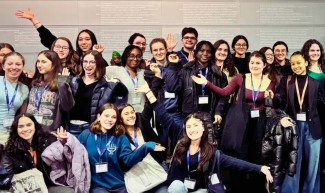
The Education Cluster of Paris Brain Institute organized from September 08 to 12, 2025, the 11th edition of the Summer School "Brain to market", its unique training in neuroscience and entrepreneurship that fosters innovation in the field of health. This year's training focused on autism spectrum disorder.

The Summer School “Brain to Market” – an intensive and multidisciplinary programme
The Summer School “Brain to Market” is an intensive 5-day training program to learn, through practice, the key skills of health entrepreneurship. Proposed since 2015 by the Open Brain School, the education pole of the Institute of the Brain, this event brought together some forty international participants: students in the dual profile of science and business of the College of Engineers, students in neurosciences of Sorbonne University and designers of the CY School of Design.
A 2025 Edition Dedicated to Autism Spectrum Disorder
The 2025 event, held from September 8 to 12, brought together participants from different backgrounds to work together on a central theme: Autism Spectrum Disorder and its societal, medical and technological challenges.
During this week of immersion, the students of the Summer School received the privileged accompaniment of a team of recognized experts in medicine, scientific research, and entrepreneurship to help them develop their project on this topic. Participants then worked in teams to design innovative solutions for people with autism, their families, medical practitioners and researchers.
Day 1: Understanding the Challenges of Autism Spectrum Disorder
The first day was devoted to scientific and clinical immersion. Participants benefited from expert speakers who presented the mechanisms of autism spectrum disorder, its sensory characteristics and its impact on daily life. This immersion in the reality of the people directly concerned and their families has made it possible to better identify the concrete needs, while opening up avenues of reflection for future innovative solutions that have yet to be invented.

Day 2: From Science to Entrepreneurship
The second day marked the transition from the laboratory to the corporate world. Under the guidance of innovation experts, participants were introduced to the basics of scientific entrepreneurship: defining a value proposition, analyzing the market, building an economic model and considering sources of financing. These methodological inputs were essential in preparing the teams to develop their own projects.
Days 3 and 4: Inspiration, Creativity and Teamwork
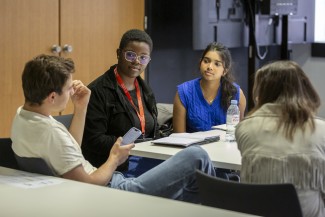
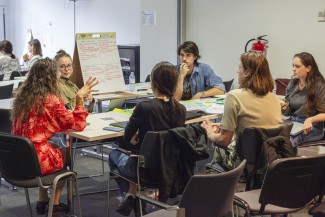
The next two days were dedicated to collaborative work. Divided into multidisciplinary teams, the participants received personalized support from neurologists and entrepreneurship experts. The objective: to transform ideas from field findings into viable project concepts. These coaching sessions fostered the emergence of original initiatives, while consolidating the collective dynamic and spirit of innovation.
Day 5: Grand Jury and Awards Ceremony
On the final day, the teams presented their projects to a panel of eminent scientists and entrepreneurs. Each group had a few minutes to defend its solution, explain its potential impact and demonstrate its feasibility. After deliberation, the best projects were awarded at a closing ceremony that highlighted the creativity and commitment of the participants.
A formative and inspiring experience
The Summer School Brain to Market is more than an academic program: it is a truly human and professional experience. Participants leave with new skills, an enriched network and a concrete vision of how research can be transformed into useful innovation for society.
This 2025 edition has highlighted the importance of building bridges between the scientific and economic worlds, so that discoveries in neuroscience can quickly benefit those directly affected and their families.

Autism spectrum disorders
Autism, or autism spectrum disorder, is a neurodevelopmental disorder that has two main symptoms: persistent problems with communication and social interaction in a variety of contexts; and restricted and repetitive behaviour, interests and...
Read more