
ROSSO Charlotte
Title: Project Sponsor, MD, PhD, PU-PH
Function: PI
Affiliated entities Sorbonne Université, AP-HP
Biography
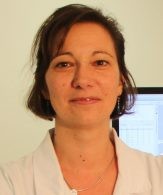
Charlotte Rosso (MD, PhD) is a professor of neurology in the Cerebrovascular Emergency Department (UCV) at Pitié-Salpêtrière Hospital and a researcher at the Brain Institute, within the MOV’IT team (Flamand-Roze / Pouget Team). She is also the scientific director of the Institute’s PANAM-TMS platform.
She directs the iCRIN Stroke unit at the Brain Institute (Clinical Research Infrastructures in Neurosciences), an infrastructure dedicated to structuring, supporting, and developing translational clinical research in the field of stroke.
She also co-directs the GRC NOVA “inNOvation in NeuroVAscular diseases” at Sorbonne University, alongside Prof. François Clarençon. This research group is dedicated to innovation in neurovascular pathologies and focuses on both stroke and micro- and macro-angiopathic diseases, such as cerebral amyloid angiopathy, small perforating artery diseases, as well as cerebral and spinal vascular malformations.
Since 2017, she has been a member of the ISRRA (International Stroke Recovery and Rehabilitation Alliance), an organization for which she has participated in two roundtables (stroke biomarkers and neuromodulation).
Her research focuses on the mechanisms of motor recovery following a stroke, with a particular interest in developing innovative approaches to neuromodulation.
Charlotte led the Inserm NeuroTechnologies Initiative Program alongside Jean-François Aubry (PhD). She leads the CERSTIM project, conducted in collaboration with the iDREAM team at ToNIC (Prof. Philippe Marque & Dr. Isabelle Loubinoux). This project is based on non-invasive brain stimulation approaches such as tACS and tDCS, aimed at resynchronizing the cerebellar-motor networks involved in motor control after a stroke.
A recipient of the 2025 call for projects from the Foundation for Stroke Research, she is developing the STIMPLEX project, an innovative study aimed at strengthening the nerve fibers controlling the paralyzed upper limb following a stroke. This project is based on the hypothesis that directly targeting the spinal cord and peripheral nerves could potentiate the motor output of cerebral pathways and improve the function of the paretic arm. The expected results will help identify the most effective stimulation parameters for future, larger-scale clinical studies incorporating repeated stimulation protocols to achieve lasting effects on motor recovery.
Main publications
Rosso, C., Daghsen, L., Bouvier, J., Checkouri, T., Millot, S., Baronnet, F., ... & Roze, E. (2025). Could the Early Disinhibition of the Unaffected Motor Cortex Predict Motor Recovery After Stroke?. Stroke, 56(10), 2904-2913.
Daghsen, L., Checkouri, T., Wittwer, A., Valabregue, R., Galanaud, D., Lejeune, F. X., ... & Rosso, C. (2024). The relationship between corticospinal excitability and structural integrity in stroke patients. Journal of Neurology, Neurosurgery & Psychiatry, 96(1), 85-94.
Delion, T., Jacquemont, T., Daghsen, L. et al. Resting-State Cortico-Cerebellar Connectivity Correlates with Post-Stroke Motor Recovery - A Prospective Functional MRI Study. Cerebellum 24, 28 (2025). https://doi.org/10.1007/s12311-024-01783-x
Edwards JD, Dominguez-Vargas AU, Rosso C, Branscheidt M, Sheehy L, Quandt F, Zamora SA, Fleming MK, Azzollini V, Mooney RA, Stagg CJ, Gerloff C, Rossi S, Cohen LG, Celnik P, Nitsche MA, Buetefisch CM, Dancause N. A translational roadmap for transcranial magnetic and direct current stimulation in stroke rehabilitation: Consensus-based core recommendations from the third stroke recovery and rehabilitation roundtable. Neurorehabil Neural Repair. 2024 Jan;38(1):19-29
Genovese G, Diaz-Fernandez B, Lejeune FX, Ronen I, Marjańska M, Yahia-Cherif L, Lehéricy S, Branzoli F, Rosso C. Longitudinal Monitoring of Microstructural Alterations in Cerebral Ischemia with in Vivo Diffusion-weighted MR Spectroscopy. Radiology. 2023Mar;306(3):e220430.
Moulton E, Valabregue R, Piotin M, Marnat G, Saleme S, Lapergue B, Lehericy S, Clarencon F, Rosso C. Interpretable deep learning for the prognosis of long- term functional outcome post-stroke using acute diffusion weighted imaging. J Cereb Blood Flow Metab. 2023 Feb;43(2):198-209.
Rosso C, Moulton EJ, Kemlin C, Leder S, Corvol JC, Mehdi S, Obadia MA, Obadia M, Yger M, Meseguer E, Perlbarg V, Valabregue R, Magno S, Lindberg P, Meunier S, Lamy JC. Cerebello-Motor Paired Associative Stimulation and Motor Recovery in Stroke: a Randomized, Sham-Controlled,Double-Blind Pilot Trial. Neurotherapeutics. 2022 Mar;19(2):491-500.
Sarraj, A., Thomalla, G., Yoshimura, S., Huo, X., Costalat, V., Zaidat, O. O., ... & Cai, C. (2026). Endovascular thrombectomy for patients with large-core ischaemic stroke presenting up to 24 h after onset (ATLAS): a systematic review and individual patient data meta-analysis with central imaging adjudication. The Lancet, 407(10543), 2015-2026.