

The causes of ADHD are not yet definitively known, but it has been confirmed that ADHD is not caused by poor parenting, psychological stress, lack of education or a lack of willingness to learn.
Attention deficit disorder with or without hyperactivity (ADHD) is a complex disorder with multifactorial origins. In other words, there are genetic and environmental factors involved.
Scientific research has so far uncovered several elements.
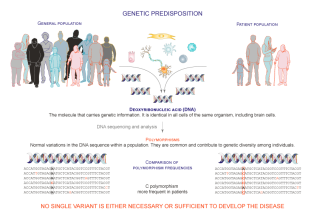
ADHD has a significant genetic component: children from families with a history of this disorder are more likely to have the same disorder. It is not, however, a monogenic hereditary disorder (i.e. linked to a single gene). Genetic predisposition to ADHD can, instead, be defined as a combination of genetic variants that independently confer a greater risk of developing ADHD than for the general population. ADHD is known to have a polygenic hereditary element (linked to several accumulated genes).
It is the accumulation of these variants that creates the genetic predisposition. This predisposition is not, however, enough on its own to trigger the disorder.
Environmental predisposing factors for ADHD
There are some environmental predisposition factors, particularly ones linked to the prenatal and perinatal period, such as:
- low birth weight
- premature birth,
- prenatal exposure to nicotine or lead.
Cette fiche a été réalisée en collaboration avec David Aziz Alaoui, interne en psychiatrie et doctorant à l'Institut du Cerveau.