Or 34,00 After 66% tax deduction

I make a monthly donation I make an IFI donation
Understand in 2 minutes

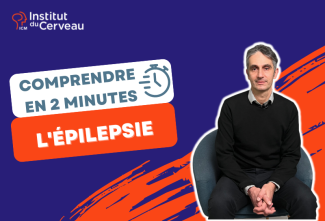
Understanding in 2 Minutes : Epilepsy

Comprendre en 2 minutes l'épilepsie
Retour à la recherche

Professor Vincent NAVARRO, Head of the Epilepsy Unit (Hôpital Pitié-Salpêtrière) and Coordinator at Paris Brain Institute, explains the causes, symptoms and treatments of epilepsy.
Pour en savoir plus sur l'épilepsie
Imagerie médicale Baulac

L’épilepsie

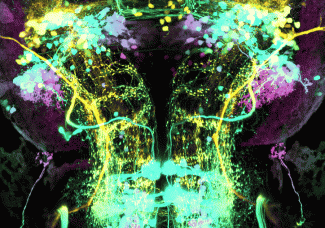
Le nom « épilepsie » a pour origine un mot grec qui signifie « frappé par surprise » reflétant l’apparition soudaine et imprévisible des crises. En France 600.000 personnes sont touchées par cette maladie neurologique chronique qui peut s’exprimer...

Read more
News that might interest you

Épilepsie temporale : une nouvelle stratégie pour corriger l’activité électrique anormale
Temporal Lobe Epilepsy: A New Strategy to Correct Abnormal Electrical Activity
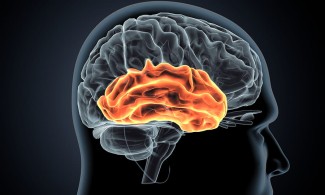
Many patients suffer from epilepsy that cannot be controlled by current medications. Surgical removal of epileptogenic brain regions is effective in only about half of cases, and not all patients are eligible for the procedure. For these individuals...
03.06.2026 Research, science & health
État de mal épileptique
Status Epilepticus: New Insights Gained from National Health Data
The most severe form of epilepsy, status epilepticus is a high-risk neurological emergency. Yet its epidemiology remains poorly understood, particularly in France. By analyzing data from the French National Health Insurance system, compiled within...
02.19.2026 Research, science & health
Analyse MERSCOPE
New treatment pathways for brain malformation-linked focal epilepsy?
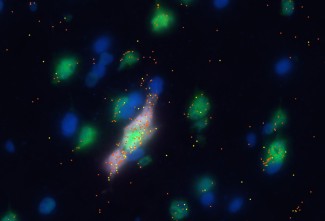
A study by Stéphanie Baulac’s team has revealed somatic mutations in different cell types in patients with type 2 focal cortical dysplasia. This disease causes drug-resistant epileptic seizures, for which the main treatment option is currently...
05.12.2025 Research, science & health
épilepsie
Status epilepticus: new inflammatory markers to improve patient care
Unlike classic epileptic seizures that last only a few seconds or minutes, " status epilepticus" refers to a state of neuronal hyperactivity in the cerebral cortex that persists for several hours or days. When this condition occurs without a readily...
03.31.2023 Research, science & health
image dépression
Ketamine and depression: a mechanism of the antidepressant effect reveal
Researchers from Inserm, CNRS, Sorbonne University and clinicians from the AP-HP and at Paris Brain Institute identified one of the mechanisms explaining ketamine effect as an antidepressant. Ketamine, usually used as an anesthetic, was administered...
10.06.2022 Research, science & health
image
Status Epilepticus: new biomarkers to improve the prognosis of patients admitted to the ICU
A major neurological emergency, status epilepticus is defined as a persistent epileptic seizure. Exposing patients to irreversible brain lesions that cause serious cognitive sequelae, it requires intensive care, which may lead to sedation (artificial...
07.06.2022 Research, science & health
See all our news