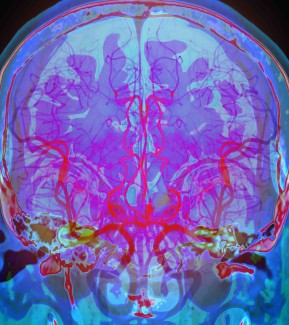

What if the flow of our thoughts occasionally just stopped? Esteban Munoz-Musat, Lionel Naccache, Thomas Andrillon, and their colleagues at Paris Brain Institute and Monash University in Melbourne show that the sensation of “thinking about nothing” has a measurable basis: it corresponds to a specific mental state which can be linked to neurophysiological and behavioral markers. Their findings are published in Proceedings of the National Academy of Sciences.
When we are awake, we seem to experience a continuous stream of sensations, reflections, memories, and impressions that make up our mental life. Yet some people report moments when they think about nothing at all. Is that even possible? Or is it an illusion caused by a memory bias?
“Mind blanking is defined as the complete absence of mental content that can be described to others. No mental images, no catchy tune looping in your head, no obsessive thoughts... nothing! This experience is often sought after by practitioners of meditation[1] or mindfulness. But it isn’t confined to them: it seems to be very common after intense, prolonged cognitive effort—such as a university exam—or in cases of sleep deprivation,” explains Esteban Munoz-Musat, neurologist and former doctoral student in the Picnic Lab at Paris Brain Institute.
The definition of mind blanking is still debated within the scientific community. Hence, there is a need to better characterize this phenomenon, which could teach us more about the richness of our subjective experiences.
“Mind blanking also appears in the clinical profile of certain psychiatric conditions, such as generalized anxiety disorder, and it seems more frequent in people with attention-deficit/hyperactivity disorder (ADHD). Studying it closely might help us better understand these conditions,” says the researcher.
A novel description of the neural substrate of mind blanking
To investigate further, Esteban Munoz-Musat, Lionel Naccache, Thomas Andrillon, and their colleagues recruited 62 healthy volunteers. The participants performed cognitive exercises designed to track fluctuations in attention during a long, tedious task. At the same time, their brain activity was recorded using high-density electroencephalography (hdEEG), and their behavior was carefully monitored.
The results show that episodes of mind blanking reported by participants were associated with specific neurophysiological markers and behavioral patterns.
During these moments, connectivity between distant neural networks decreased, and visual information processing was disrupted. In particular, “late” visual processing (250–300 ms after exposure to a stimulus—a time window considered in some models to reflect the conscious stage of visual processing) was largely absent. Participants were also slightly drowsy, slower, and more error-prone.
“These observations suggest that during a mind blanking episode, participants had reduced access to sensory information from their environment,” explains Thomas Andrillon (Inserm), senior author of the study. “These new data support an emerging idea: being awake does not necessarily mean being conscious of something. Mind blanking corresponds to a genuine interruption in the stream of thoughts.”
A momentary loss of consciousness?
Recent work shows that the fluctuations in consciousness we experience during the day and night are complex and do not coincide with the classic dichotomy between wakefulness and sleep.
For example, some individuals are capable of lucid dreaming—that is, they are aware that they are dreaming—while in REM sleep. Perhaps mind blanking is the opposite experience: a temporary loss of consciousness during wakefulness.
“Mind blanking is likely an extremely common occurrence, during which certain brain regions briefly slip into a sleep-like state. We estimate it accounts for 5 to 20% of waking hours, although there are significant differences between individuals,” notes the researcher.
The study also shows that, at the neurophysiological level, mind blanking is distinct from two other mental states: intense concentration on a task (on-task) and mind wandering, in which attention withdraws from the external environment and turns to thoughts unrelated to the current context.
Our findings suggest that the structure of conscious experience is more like a mosaic of discrete states rather than a continuous mental film. A mosaic in which the absence of certain tiles results in brief moments of unconsciousness when the subject is awake.
Future research will determine whether mind blanking could be used in the clinical description of certain neurological or psychiatric disorders. Above all, it opens new avenues for understanding consciousness and attention.
[1] In certain spiritual traditions, such as Buddhism, this is called a state of cessation-or nirodha in Sanskrit.
Funding
This study was funded by the European Research Council (ERC), the French National Research Agency (ANR), and the Human Frontier Science Program (HFSP).
Reference
Munoz-Musat, E., et al. Behavioral, experiential, and physiological signatures of mind blanking. PNAS, December 2025. DOI: 10.1073/pnas.2510262122.

Consciousness, attention, visual perception and language are complex cognitive functions involving different brain areas and neural networks.
Read more