More than one in three people will experience a brain disorder at some point in their lives. This reality, identified by the World Health Organization as a major public health priority, calls for unprecedented international mobilization. It is against this backdrop that leading global actors in health, research, and innovation will gather in Paris on 15 January 2026 for the first World Brain Health Forum.
Neurological and psychiatric disorders are now the leading cause of disability worldwide and the second leading
cause of death. Population ageing further amplifies this burden, as the prevalence of certain conditions—such as Alzheimer’s disease, Parkinson’s disease, amyotrophic lateral sclerosis and stroke—increases with age. The rapid rise in dementia cases, in particular, represents a ticking time bomb for our societies. At the same time, mental health disorders are increasing sharply among young people, with a significant impact on the working-age population. Many brain diseases still have no curative treatment or therapies capable of significantly altering their progression. The human, social, and economic consequences are considerable. Brain health is not merely a medical issue; it is a societal, economic, and strategic imperative. The cost of brain diseases—both neurological and psychiatric— is estimated at over €1,000 billion in Europe alone.
In this context of urgency, a turning point is emerging. Major advances in neuroscience, combined with unprecedented technological progress in molecular biology, imaging, digital innovation, artificial intelligence, and data science, are opening up new horizons. These developments enable a more refined understanding of brain diseases and of the biological, social, and environmental factors that influence their onset and progression.
The challenge today is to accelerate the translation of these scientific advances into tangible benefits for patients throughout their lives. This includes identifying levers to strengthen prevention, enable earlier diagnosis, and foster the development of innovative therapeutic approaches. Improving brain health on a global scale requires close cooperation between academia, public institutions, international organizations, and private- sector stakeholders.
It is in this spirit that the Paris Brain Institute, in partnership with the European Cure- ND Alliance and the International Brain Health Alliance, is launching the World Brain Health Forum.
This international, cross-sector event will be inaugurated by His Excellency Ban Ki-moon, eighth Secretary-General of the United Nations, and Dr Tedros Adhanom Ghebreyesus, Director-General of the World Health Organization.
The brain is the organ that shapes how we think, act, and interact with society. Proper brain function and mental well-being are pillars of healthy living, underpinning the cognitive, emotional, and social richness of individual lives. At the level of human communities, these resources also determine our societies’ ability to solve problems, work together, innovate, and cooperate.
Some Epidemiological Benchmarks
- More than one in three people will be affected by a neurological or psychiatric disorder during their lifetime, representing approximately 3.4 billion people worldwide.
- Neurological disorders are the leading cause of reduced quality of life and disability.
- Around 11 million people worldwide die each year as a result of neurological disorders.
- An estimated 78 million people will be living with dementia by 2030, and 139 million by 20506.
- The overall burden of brain diseases is significantly higher than that of cancer or cardiovascular diseases.
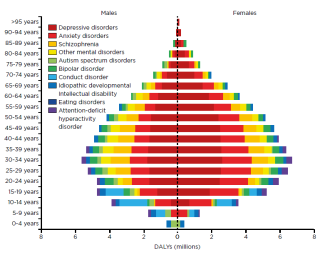
Disability-Adjusted Life Years (DALYs) are a metric used to assess the burden of disease. They estimate, at the population level, the number of years of healthy life lost due to disability or premature death.
Top 10 neurological disorders affecting quality of life, according to the World Health Organization
- Stroke : occurs when a blood vessel supplying the brain is blocked or ruptures, interrupting blood flow. Stroke can cause irreversible brain damage and is the leading cause of acquired disability in adults.
- Neonatal encephalopathy: impairment of brain function occurring before, during, or shortly after birth, most often due to lack of oxygen. It can lead to death or severe motor and cognitive disabilities.
- Migraine: a highly disabling chronic neurological disorder characterized by recurrent headaches, often accompanied by nausea and heightened sensitivity to light and sound.
- Alzheimer’s disease and other dementias: dementia is defined by a progressive decline in cognitive functions, including memory, reasoning, and judgment. Alzheimer’s disease accounts for approximately 60–70% of cases.
- Diabetic neuropathy: a complication of diabetes caused by nerve damage, leading to symptoms such as loss of sensation, muscle weakness, or pain.
- Meningitis: inflammation of the membranes surrounding the brain and spinal cord. Whether infectious or non-infectious, it can be life-threatening and cause lasting neurological complications.
- Idiopathic epilepsy: a form of epilepsy with no identified cause, associated with genetic predisposition and accounting for an estimated 10–15% of epilepsy cases.
- Neurological complications due to preterm birth: premature infants are at increased risk of postnatal brain injury, which can result in long-term neurological disorders.
- Autism spectrum disorders: a group of neurodevelopmental conditions emerging in early childhood, characterized by difficulties in communication and social interaction, as well as restricted or repetitive behaviours and interests.
- Nervous system cancers: tumors affecting the brain, spinal cord, and peripheral nerves.
These disorders rank among the ten leading causes of neurological morbidity worldwide. Their impact is particularly pronounced in low- and middle-income countries, which are home to nearly 80% of the world’s population but account for more than 90% of neurological disabilities and 84% of deaths related to neurological disorders.
Brain health: a unifying concept
Brain health goes beyond the absence of neurological or psychiatric disease. It refers to a state of brain functioning that enables individuals to think, learn, perceive, move, experience emotions, and interact with others. Good brain health provides the resources needed to care for oneself and others, cope with everyday life, and create, invent, and make sense of the world we live in.
At the collective level, the capacities afforded by healthy brains are amplified, indirectly supporting democratic vitality and societies’ capacity for innovation.
Towards a holistic approach to brain health
For a long time, brain health and mental health were addressed separately, as if one referred solely to the integrity and function of the brain as an organ, while the other concerned fluctuations in psychological well-being. This distinction is now obsolete. Neurological and psychiatric disorders often share common origins, mechanisms, and vulnerability factors—genetic, epigenetic, or environmental.
Depression, bipolar disorder, and schizophrenia, for example, are associated with an increased risk of developing dementia or Parkinson’s disease. Similarly, recent research suggests that abnormalities linked to Huntington’s disease or Alzheimer’s disease may emerge during neurodevelopment, as is the case for schizophrenia or autism spectrum disorders.
Neurological and psychiatric disorders can trigger or exacerbate one another. This underscores the need for a more unified vision of diseases affecting the central nervous system—approaching them not as isolated entities, but as different expressions of underlying abnormalities that can sometimes be prevented, mitigated, or corrected.
Breaking down research silos to accelerate innovation
Advancing brain health requires interdisciplinary collaboration. Yet current research, innovation, regulatory, and funding systems remain largely compartmentalized into disciplinary and thematic silos such as ageing, neurobiology, psychiatry, or mental health. Overcoming this fragmentation has become essential to foster innovation and develop truly effective treatments.
Therapeutic options for central nervous system disorders remain limited, and clinical trial failures—particularly in neurodegenerative diseases—have accumulated over recent decades.
A decisive shift is nevertheless underway. Recent scientific and technological advances—such as omics, artificial intelligence, data science, imaging, and gene and RNA-based therapies—offer unprecedented opportunities to better understand, predict, and monitor brain diseases across the lifespan. They pave the way for new prevention and diagnostic tools, as well as major therapeutic innovations.
Fully seizing these opportunities calls for close global cooperation between academic, industrial, and institutional actors, grounded in data sharing, pooled tools and expertise, and the creation of large, representative cohorts.
Five themes to rethink brain health
1. Redefining the boundaries of brain diseases: Towards an integrated biological approach
Neurological and psychiatric disorders share biological mechanisms and risk factors. It is now possible to rethink their classification based on biological markers rather than constantly shifting clinical categories, potentially accelerating the development of biomarkers, targeted therapies, and prevention strategies—particularly through the identification of modifiable risk factors.
2. Accelerating the development of effective therapies: Strengthening partnerships
Technological innovation and scientific advances could mark the beginning of a new era for brain health. To harness these opportunities and accelerate translational research outcomes, multisector collaborations are essential. In therapeutic development, numerous successes—stemming from very different approaches— already highlight the crucial role of fundamental research.
3. Harnessing artificial intelligence and digital innovation: A major lever for research and care
AI and data science are poised to transform the understanding, diagnosis, prevention, and treatment of brain diseases, provided that accessibility and representativeness are ensured and potential risks are anticipated.
4. Deploying precision approaches across the lifespan: From childhood to old age
The rise in age-related brain diseases and the growing prevalence of mental disorders among young people underscore the importance of a lifelong approach to brain health. Advances in genomics and multi-omics technologies are paving the way for precision medicine tailored to every stage of life.
5. Promoting equity in research and its outcomes: Closing gaps to improve care
Research on brain diseases remains uneven across regions and insufficiently representative of human diversity, even though by 2050, more than two-thirds of people affected by brain disorders will live in the Global South. Scaling up research efforts requires strengthened cooperation and the pooling of data, tools, expertise, and resources across countries.
Contributing to international dialogue
Following the Forum, speakers will convene at the Institut de France on 16 January to place the key insights from discussions and presentations into perspective. These exchanges will shed light on current challenges in therapeutic innovation in neuroscience and psychiatry, as well as contemporary approaches to brain health worldwide.
Their conclusions will be published in a landmark scientific publication intended to inform collective reflection and international debate on brain health, particularly within future multilateral dialogue frameworks.
An event aligned with the Sustainable Development Goals
The 17 Sustainable Development Goals defined by United Nations Member States
address the major challenges humanity must tackle to eradicate poverty, ensure
health, equality, peace, and prosperity for all, and protect the planet and the climate.
Adopted by the United Nations in September 2015, they form the backbone of the
2030 Agenda.

Speakers
Stéphanie Debette is a neurologist and epidemiologist, Professor at Sorbonne University and the Paris Hospitals (APHP). After founding the Vascular Brain Health Institute (VBHI) in Bordeaux and leading the Bordeaux Population Health research center since 2025, she has served as the director of the Paris Brain Institute. She coordinates large international, cross-ancestry collaborative studies on the genomic and molecular epidemiology of vascular brain diseases. Her research has identified key genomic regions and biological pathways involved in cerebral small vessel disease, a leading cause of stroke and dementia, and its links to neurodegeneration, also revealing effects on brain structure from early life. She was awarded several prizes, including the Inserm Grand Prix in 2024, and is a member of the French Academy of Science.
Natalia S. Rost, MD, MPH, FAAN, FAHA, is President of the American Academy of Neurology, C. Miller Fisher Endowed Chair in Stroke Research at Massachusetts General Hospital, and Professor of Neurology at Harvard Medical School. Her expertise in cerebrovascular neuroimaging and big-data approaches to personalized stroke outcomes is internationally recognized. A clinician-scientist at the helm of an ambitious research program on brain health, Rost is an MGH Research Scholar and Principal Investigator of the NIH-funded DISCOVERY study. She is a recipient of the MGH Ray Adams Clinical Mentor Award and AAN’s Michael S. Pessin Stroke Leadership and Leading in Excellence Through Mentorship Awards.
Siddharthan Chandran is Director of the UK MRC Dementia Research Institute. He graduated from Southampton Medical School, trained in neurology at Queen Square, UCL, and Cambridge, where he also undertook a PhD in developmental neurobiology. He holds the MacDonald Chair of Neurology at the University of Edinburgh, is Professor of Neurology at University College London, and Visiting Faculty at the Centre for Brain Research, Indian Institute of Science, India.
He is best known for his work in motor neuron disease (MND) and multiple sclerosis (MS). His work encompasses the use of human-induced pluripotent stem cells to identify cellular phenotypes of neurodegenerative diseases (NDDs) and pioneering innovation in multi-arm, multi-stage platform trials for NDDs.
He is a Fellow of the Royal Society of Edinburgh and the Academy of Medical Sciences.
Joachim L. Schultze is the acting Scientific Director of the German Center for Neurodegenerative Diseases (DZNE). As a physician by training, he started his research career at Dana-Farber Cancer Institute in Boston. He focuses on Systems Medicine, with an emphasis on single-cell genomics and transcriptomics. He has made significant contributions to our understanding of inflammatory conditions, neurodegenerative diseases, and COVID-19. He has developed novel AI approaches, such as Swarm Learning, to analyze large-scale biomedical data. He has published over 300 peer-reviewed articles, is a highly cited researcher, and has received several awards, including the Sofja Kovalevskaja Award of the Humboldt Foundation.
Rufus O. Akinyemi, past winner of the 2023 Gold Medal Prize (Life Sciences) of the Nigerian Academy of Science (NAS), is a Physician–Scientist, Professor of Geriatric Neurology and Translational Neuroscience, and Director of the Biomedical Research Centre, College of Medicine, University of Ibadan, Nigeria. He’s an elected fellow of the Academy of Medicine Specialties of Nigeria, the Nigerian Academy of Science, and the African Academy of Sciences. His research focuses on vascular and degenerative brain disorders using a translational bench-bedside-community framework. He spearheaded the establishment of the African Stroke Organization (ASO) and the African Dementia Consortium (AfDC) and hosted the first African Stroke Leaders’ Summit. He co-led the largest study of stroke in Africa, the NIH-funded SIREN-SIBS Genomics Study in the last decade and currently serves as African lead on the NIH/NIA–funded DAWNS Study, a global study exploring the genetic architecture of AD and Related Dementias. He’s well-published in peer-reviewed journals, with over 300 publications, an H-index of 71, and 112,451 citations.
Mathieu Vandenbulcke is a Belgian full professor at the Department of Neurosciences at KU Leuven, Director of the KU Leuven Brain Institute, and chair of the Scientific Committee of Mission Lucidity (partnership between Flemish Institute for Biotechnology, Imec, UZ Leuven, KU Leuven).
His research expertise includes behavioral studies and multimodal neuroimaging in aging, dementia, and late-life psychiatric disorders.
Prof. Vandenbulcke also serves as head of the Department of Geriatric Psychiatry at UZ Leuven and is active in clinical care and public engagement. Vandenbulcke has authored books on brain health and aging and contributes to interdisciplinary efforts to understand brain function and improve care for older adults.
Claudio Bassetti is Swiss, married, and a father of three boys, and speaks six languages. He received an MD degree from the University of Basel. Following appointments at the University Hospital in Zurich and the Neurocenter of Southern Switzerland (founding chair), he was a full professor and chair of the Neurology Department at the University of Bern (2012-2024), where he serves as Dean of the Medical Faculty (2020-).
His research focus is on the relationship between sleep and brain disorders. He authored 650 publications (H-index 105) and 12 books.
Bassetti served as president of the European Neurological Society and the European Sleep Society. Research Society, Swiss Neurological Society, and European Academy of Neurology.
Professor Chen is a Senior Clinician-Scientist at the Yong Loo Lin School of Medicine, National University of Singapore. His research training was at Oxford University and the Institute of Neurology. Queens Square, London. His major interests are in blood biomarkers, neuroimaging, and the treatment of stroke and dementia. He has over 500 publications and leads multiple studies and clinical trials.
As Director of the Memory Aging and Cognition Centre, he has supervised over 40 post-graduate students, and by co-chairing the World Stroke Organisation’s Future Leaders Program, he hopes to enhance mentorship of young academics.
He aims to build regional collaborations in Brain Health through his roles as President of the Asian Society Against Dementia and the Asian Oceanian Association of Neurology.
Professor Peter van Wijngaarden is a clinician-scientist and Executive Director of The Florey Institute of Neuroscience and Mental Health, the largest brain research institute in Australia. The Florey is a proud research partner of the Paris Brain Institute.
Emanuele Buratti is currently Group Leader of the Molecular Pathology Lab at the International Centre for Genetic Engineering and Biotechnology (ICGEB) in Trieste. Dr. Buratti’s principal areas of expertise are the investigation of RNA-binding proteins and RNA metabolism in neurodegeneration and metabolic diseases. On these subjects, EB is the author of more than 270 research papers in peer-reviewed publications and book chapters (orcid.org/0000-0002-1356-9074), with an h-index of 66, mostly focusing on the impact of RNA processing alterations in Amyotrophic Lateral Sclerosis (ALS) and Frontotemporal Dementia (FTD). He is also the president of the Scientific Committee of the Italian FTD Patient Association (AIMFT).
Alexander Tsiskaridze, MD, PhD, DSc, FESO, MAE, is Professor and Chair of Neurology at Ivane Javakhishvili Tbilisi State University and Head of Neurological Service at Pineo Medical Ecosystem Hospital, Georgia. Trained at Tbilisi State Medical University, he pursued fellowships and research at CHUV Lausanne with support from the European Neurological Society and the Swiss National Science Foundation. He has held senior academic and leadership roles, including Dean and Vice Rector. Author of 54 scientific papers and a Cambridge University Press book, he has received numerous international awards. He is President of the Georgian Stroke Association and a member of Academia Europaea.
And more than 60 leading international experts.
Program
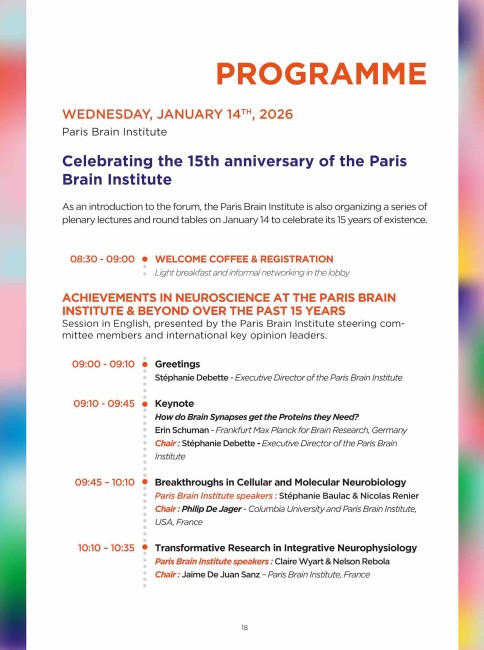
The full two-day program is available for consultation here or download.

With the generous support of :

- Optimizing brain health across the life course: WHO position paper, World Health Organization, Août 2022 https://www.who.int/publications/i/item/9789240054561
- Estimation of the global prevalence of dementia in 2019 and forecasted prevalence in 2050: an analysis for the Global Burden of Disease Study 2019, The Lancet Public Health, Février 2022 – https://www.thelancet.com/journals/lanpub/article/PIIS2468-2667(21)00249-8/fulltext
- The Bern Declaration on Brain Health: a decalogue to launch an international alliance, The Lancet Neurology, Septembre 2025. https://www.thelancet.com/journals/laneur/article/PIIS1474-4422(25)00286-8
- Global, regional, and national burden of disorders affecting the nervous system, 1990–2021: a systematic analysis for the Global Burden of Disease Study, The Lancet Neurology, 2021, mis à jour en 2024. https://www.thelancet.com/journals/laneur/article/PIIS1474-4422(24)00038-3/ fulltext
- Global status report on neurology, World Health Organization, Octobre 2025 - https://www.who.int/publications/i/item/9789240116139
- Global status report on the public health response to dementia, World Health Organization, 2021. https://www.who.int/publications/i/item/9789240033245
- Global status report on neurology, World Health Organization, Octobre 2025 - https://www.who.int/publications/i/item/9789240116139
- The European Academy of Neurology Brain Health Strategy: One brain, one life, one approach, European Journal of Neurology, Mai 2022. https://onlinelibrary.wiley.com/doi/10.1111/ene.15391
- https://www.agenda-2030.fr/