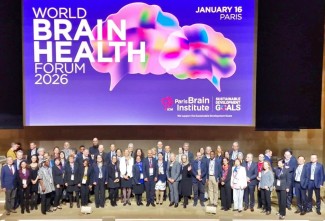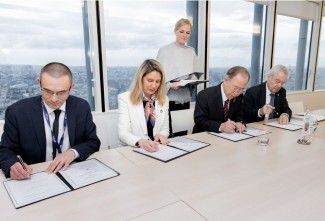

This year, NeurAL, Paris Brain Institute’s start-up studio, has selected a project by the researcher Brahim Nait Oumesmar that seeks to develop a remyelinating treatment for multiple sclerosis. The winner will benefit from personalized support and funding to develop his project, thanks to support from the Anne and Claude Berda foundation, Indosuez Wealth Management and the Paris Brain Institute Circle of Friends.
Paris Brain Institute strives to transform discoveries in basic research into useful health products for patients. The Institute draws on a combination of academic excellence, entrepreneurial spirit and the support of its patrons to create breakthrough technologies in neuroscience.
To achieve this ambition, NeurAL identifies Europe’s most promising research and development projects and supports them for 12 to 18 months through a personalized program that combines scientific, technological, clinical and regulatory support. The objective is to de-risk projects, persuade investors, raise the funds needed to create a start-up, and build a development strategy.
In addition to this personalized program, the winner of the 2025 NeurAL call for projects, Brahim Nait Oumesmar, will receive dedicated funding of up to 400,000 euros, thanks to the support of the Anne and Claude Berda Foundation, Indosuez Wealth Management and the Paris Brain Institute Circle of Friends.
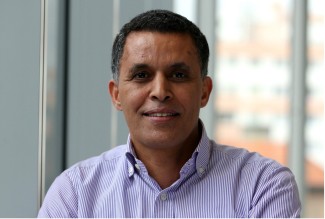
Brahim Nait Oumesmar is Inserm Research Director within Paris Brain Institute’s REGAIN-MS team. He is a specialist in the cellular and molecular mechanisms involved in the regeneration of myelin—the sheath that protects nerve fiber. With his team, he has helped to develop experimental treatments for demyelinating diseases.
His work focuses specifically on Multiple sclerosis (MS), an inflammatory disease in which the immune system attacks myelin, causing damage to the brain, the spinal cord and optic nerves. The progression of the disease presents as degeneration of the axons, the long nerve fibers that transmit electrical impulses between the central nervous system and the rest of the body—causing motor, sensory and cognitive disorders.
Multiple sclerosis is the leading cause of non-trauma-induced disability in young adults. Current treatments aim to reduce inflammation and prevent flare-ups, but have little effect on the long-term progression of the disability.
There is now compelling evidence that myelin regeneration—also known as remyelination—helps to maintain axon integrity and slow down neurodegeneration. This means that encouraging this process offers a promising course of treatment, alongside current strategies.
To achieve this, Brahim Nait Oumesmar’s team has used an innovative technology for automated phenotypic screening via microscopy, enabling the identification of new therapeutic approaches based on molecules already identified. This strategy has uncovered a previously unexplored signaling pathway, and plays a key role in myelin regeneration.
The team found that modulating this pathway stimulates myelin precursor cells and promotes the repair of nerve tissue in mice. Currently, the goal of Brahim Nait Oumesmar and his colleagues is to design new compounds that specifically target this mechanism. Before becoming a drug candidate, the chosen compound must successfully complete the various stages of development and pre-clinical approval, with the support of the NeurAL program’s expertise.



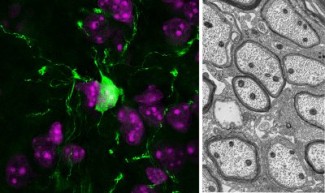
Multiple Sclerosis (MS)
Multiple sclerosis (MS) is the second leading cause of acquired disability in young adults, after injury. It affects 120,000 people in France today, with 3,000 new cases diagnosed each year. This makes it a major public health issue, since it also...
Read more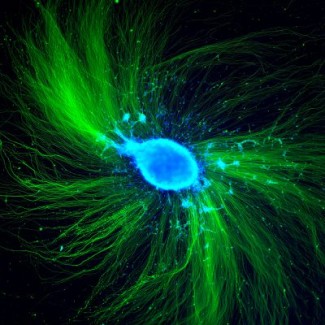
The team "Repair in demyelinating diseases: from biology to clinical translation" is interested in the mechanisms of myelin repair in the brain and spinal cord in multiple sclerosis and demyelinating diseases.
Read more