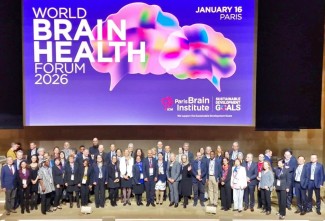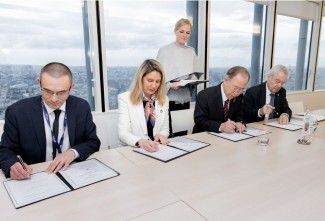
On the occasion of the Summit for Action on Artificial Intelligence (AI), which took place on 10 and 11 February 2025 in Paris, France welcomed representatives of some 100 countries, including many heads of state, business leaders, researchers and members of civil society. The project “NewBorn NeuroDigital” carried by Paris Brain Institute and the AP-HP, was selected by the General Secretariat for Investment from among the 35 challenges “Convergence IA” presented at the event.
NewBorn NeuroDigital is a project to create a medical decision support tool for paediatric resuscitators and neonatologists. It synthesizes data on the brain activity of newborns with birth asphyxia, to help caregivers assess possible brain damage and provide indications for treatment.
Sponsored by Marc Fiammante, a retired IBM Fellow and PhD student at Paris Brain Institute, the project was developed at the initiative of Anne-Isabelle Vermersch (AP-HP), head of the unit “Clinical child neurophysiology” at the Armand-Trousseau Hospital, with the support of Mario Chavez (CNRS), a researcher with the NERV team, and with the support of The Human Safety Net (THSN), the foundation of the Generali group.
The critical situation of perinatal asphyxia
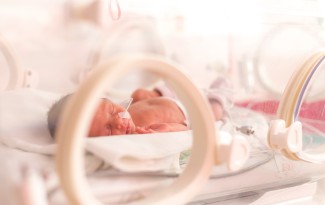
Every year in Europe, almost 20 000 children are born in a situation of asphyxia, that is, prolonged oxygen deprivation with a variety of causes. It leads to brain damage that is responsible for around 5 000 deaths, and for around 10 000 children, for a disability that will last into adulthood.
Neuroprotective treatment helps to limit the extent of damage and considerably reduce the neurological sequelae: it consists of placing the baby in hypothermia at 33°5 for 72 hours, on resuscitation duty.
However, this procedure is cumbersome and costly, and the window for intervention is shortened: treatment must be decided before the child’s 6th hour of life with a high level of certainty, which requires analysis of the brain activity of the newborn from electroencephalography (EEG) data with the expertise of a pediatric neurophysiologist. Few hospitals have these facilities, and only one in six babies is currently hypothermic.
AI for decision-making
How can physicians be provided with the best level of information for rapid and informed decision-making? Thanks to his expertise in signal processing, Marc Fiammante has developed a tool based on artificial intelligence, capable of analysing different aspects of EEG activity in order to give a clear synthesis accessible to caregivers – even when they are not experts in paediatric neurophysiology.
We used EEG recordings of 104 newborns affected by perinatal asphyxia and cared for in the service of Anne-Isabelle Vermersch at the Armand-Trousseau hospital between 2005 and 2020. These children had an EEG within six hours of birth, and we know their treatment and progress. We therefore conducted a retrospective study using these data.
The researchers first classified normal EEG tracings and pathological tracings, then developed an automated process to detect asphyxia-related brain damage, and then to inform physicians about the appropriateness of hypothermia treatment. This decision support is all the more necessary when brain damage is minimal and it is difficult to assess possible sequelae.
“The EEG data of infants are very specific. We must interpret them in the context of brain maturation, using appropriate statistical methods. To do this, we have developed a close collaboration between paediatric neurophysiologists at the hospital, researchers at the Brain Institute and IBM AI engineers,” says Mario Chavez.
A future field tool?
This innovative tool, tested in a real situation at the Armand-Trousseau hospital in order to adapt it to the needs of resuscitators, makes it possible to detect 98% of cases in which the child can be treated by hypothermia. In March 2024, Marc Fiammante’s invention led to a patent application by the AP-HP.
The next step is to conduct a rigorous validation study in several neonatal wards to ensure its reliability in different care environments, and then to transform it into a digital health product that is accessible to all health care providers in the delivery room – to help them choose the best option for each infant.
"Because we work in a hurry, we needed a tool that provides a clear-cut, binary recommendation on whether or not to put the child in hypothermia at birth, rather than a graduated risk indicator," concludes Vermersch. Finally, we needed a mobile application with a simple and intuitive interface, accessible on a tablet or smartphone screen, ready to be used by all caregivers. Eventually, we hope that this system will be made available in all maternity wards, in order to improve the diagnosis of perinatal asphyxia and reduce the risk of sequelae for a large number of babies, through appropriate care.”

The NERV team is dedicated to exploring how the brain functions as a complex network. Put simply, they aim to "read" and "understand" brain signals to create tools that could one day help people with brain disorders. Their main goal is to design...
Read more