
Discover the CaCovi project, which has shown that brain activity is regulated by inhibitory neurons called "basket cells", endowed with receptors sensitive to endogenous cannabinoids, opening up therapeutic prospects for pathologies such as epilepsy, schizophrenia and anxiety.
Epilepsy and Schizophrenia: What Neurons and Brain Balance Say
Epilepsy and schizophrenia are two very different pathologies in their manifestations, but they share a fundamental commonality: they involve disturbances in the functioning of neurons and the balance of brain activity. Neuroscience research, particularly at the Brain Institute, is now providing new insights into the cellular mechanisms that regulate our perception of the world, our reactions and our behaviours. These advances open up promising therapeutic prospects for several neurological and psychiatric diseases.
The Brain: A Network of Neurons in Permanent Communication
Every moment of our lives is guided by our brain's ability to process information. Seeing an image, hearing a sound, smelling an odour: these perceptions are immediately analysed to enable us to understand our environment and adapt our reactions. This process relies on the activity of neurons, specialized cells of the nervous system.
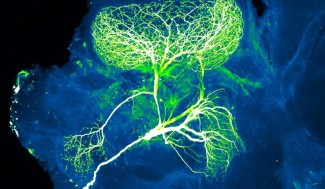
The human central nervous system contains about 100 billion neurons. Each of these neurons has a specific architecture that allows it to receive, process and transmit electrical signals. Dendrites pick up messages from other neurons. The cell body analyzes this information and then the axon transmits the signal in electrical form to its terminals.
At the end of this circuit is the synapse, the real area of communication between two neurons. This is where the message changes in nature: the electrical signal becomes chemical through the release of neurotransmitters, small messenger molecules that attach to receptors in the next neuron. This transmission system is the basis of thought, movement, emotion and memory.
Excitation and Inhibition: A Vital Balance for the Brain
Not all neurons transmit signals in the same way. Most release so-called excitatory neurotransmitters, which promote the activation of neighbouring neurons. But about 20% of neurons produce a particular substance: GABA (gamma-aminobutyric acid). This neurotransmitter plays the opposite role by blocking or inhibiting neuronal activity.
This balance between excitation and inhibition is essential. Too much excitement can lead to excessive brain activity, while too much inhibition can slow down or disrupt neural circuits. The brain thus functions as a finely regulated system where each signal must be constantly tuned.
When this balance is disturbed, certain pathologies may appear. This is particularly true of epilepsy, characterized by excessive and synchronized electrical discharges into the brain, or schizophrenia, a complex psychiatric disorder involving alterations in neural circuits and the transmission of information.
The role of inhibitory neurons in information processing
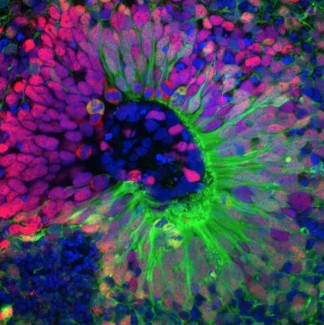
Recent research has identified specific types of inhibitory neurons that play a central role in the integration of sensory information. In particular, the CACOVI research project has revealed the existence of specific neurons called empanized cells.
These neurons have receptors that are sensitive to endogenous cannabinoids, molecules naturally produced by the brain. These substances are involved in the fine regulation of neuronal activity. In mice, these cells are involved in the ability to recognize an important visual image — such as that of a predator — and to immediately initiate survival behaviour.
This discovery underlines how neuronal inhibition is not simply about “switching off” a signal. On the contrary, it allows information to be filtered, adjusted and prioritized in order to produce a response adapted to the situation.
Cannabinoids and GABA modulation: a key to understanding certain diseases
Work from the CACOVI project has also shown that cannabinoid receptors directly influence GABA release. In other words, they modulate the level of inhibition in the brain. This differentiated regulation makes it possible to adjust neuronal communication with great precision.
This ability to neuromodulate reveals the complexity of brain functioning. It highlights subtle mechanisms that allow the brain to adapt to sensory, emotional and cognitive stimuli.
When these modulation mechanisms no longer function properly, the excitation-inhibition equilibrium may be disrupted. This imbalance is now considered a major avenue for understanding pathologies such as epilepsy, where neuronal activity becomes excessive, but also schizophrenia, where the transmission of information and sensory integration can be impaired.
Towards new therapeutic perspectives
Discoveries around inhibitory neurons and cannabinoid receptors offer encouraging prospects. By better understanding how the brain naturally adjusts its signals, researchers can consider more targeted therapeutic strategies.
These advances are not limited to epilepsy and schizophrenia. They may also benefit other neurological or psychiatric disorders, such as anxiety. The challenge is to restore neural balance without disrupting the overall functioning of the brain.
At the Brain Institute, this research illustrates the importance of basic neuroscience: by studying the finer mechanisms of neuronal communication, it becomes possible to imagine new treatments that can act precisely on specific circuits.
Understanding how a neuron receives, processes and transmits a signal, how a neurotransmitter blocks or stimulates activity, or how endogenous molecules influence these exchanges, is ultimately like deciphering the inner language of the brain. And it is by mastering this language that medicine can better prevent and treat complex pathologies such as epilepsy and schizophrenia.
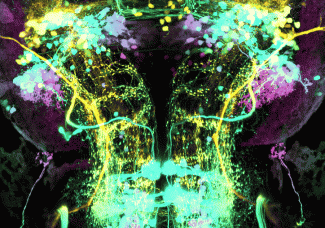
Epilepsy
The word ‘epilepsy’ originates from a Greek word meaning ‘to seize’, reflecting the sudden and unpredictable onset of seizures. In France, 600,000 people are affected by this chronic neurological disease, which can present with different symptoms...
Read more
Schizophrenia
Schizophrenia is a psychiatric condition classed as a chronic mental illness. It is an extremely debilitating but relatively common condition. In France, around 600,000 people suffer from schizophrenia, and a total of 0.7% people worldwide: in other...
Read more