A molecule previously studied in the context of sleep disorders and attention deficit hyperactivity disorder (ADHD) is now, for the first time, revealing its potential in experimental models of multiple sclerosis (MS): it protects neurons and promotes myelin repair. Published in Science Translational Medicine, this new study shows that bavisant targets two of the main mechanisms of the disease—nerve fiber degeneration and failure of the remyelination process—and could become a future drug candidate.
A first version of this press release was issued by Vita-Salute San Raffaele University.
The international BRAVEinMS project, coordinated by Vita-Salute San Raffaele University and IRCCS San Raffaele in Milan, brings together several leading research centers engaged in multiple sclerosis research, including the Paris Brain Institute, the University of California, San Francisco (UCSF), and Münster University Hospital. By exploring a library of more than 1,500 molecules, researchers identified a new drug candidate ready for clinical development.
This discovery, in which the Paris Brain Institute played a major role, represents a key outcome of the BRAVEinMS consortium—an international research network established in 2017 with financial support from the International Progressive MS Alliance.
A Disease without a Curative Treatment
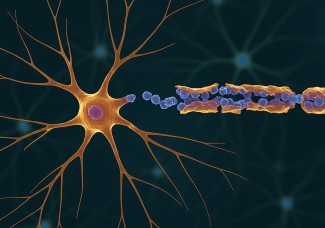
Progressive forms of multiple sclerosis—including primary progressive MS (PPMS) and secondary progressive MS (SPMS)—are the most severe types of the disease. They are characterized by continuous degeneration of nerve fibers and loss of myelin, the sheath that protects the axons and enables efficient transmission of nerve impulses. This leads to a progressive decline in motor, visual, and cognitive functions, which currently available treatments fail to halt.
Over recent decades, research has focused on developing pharmacological approaches that simultaneously promote myelin repair and protect neurons. However, this strategy—which could slow or stop neurodegeneration—has not yet succeeded.
From an Urgent Clinical Need to an Innovative Platform
In 2017, the BRAVEinMS consortium embarked on an ambitious effort: repurposing drugs already approved or undergoing clinical trials for other therapeutic indications to treat multiple sclerosis.
Starting with a set of drugs already known and used in humans—so-called repurposed drugs—researchers sought the fastest, most efficient way to identify molecules capable of protecting and regenerating the nervous system.
They developed a novel screening platform combining artificial intelligence–based analyses of large biological and pharmacological databases, human cellular models derived from patient stem cells, brain tissue cultures, and experimental models of multiple sclerosis.
In essence, this is a predictive, rational screening platform: instead of testing compounds one by one—a slow, costly process—thousands of molecules are analyzed simultaneously and selected based on their regenerative potential in experimental models.
From 1,500 Molecules to a Drug Candidate: Bavisant
Of the 1,500 drugs initially selected, in silico analyses identified 273 molecules with potential activity on myelin and neurons. Following a series of tests assessing toxicity in human and animal neurons and oligodendrocytes (the myelin-producing cells), the number of candidates was reduced to 32, then to 6 after efficacy testing. Researchers ultimately focused on bavisant, a histamine H3 receptor antagonist with a well-established safety profile.
In various experimental models of multiple sclerosis, including humanized mouse models, bavisant stimulated remyelination of nerve fibers, protected neurons against degenerative damage, and reduced inflammation. The molecule acts simultaneously on two key cell types—neurons and oligodendrocytes—allowing nervous tissue to regenerate and withstand injury better.
A New Chapter for Regenerative Medicine
Thanks to the international collaboration fostered within the BRAVEinMS consortium, we have developed an innovative drug-screening pipeline to accelerate the discovery of remyelinating and neuroprotective compounds. We identified several promising drugs that improve myelin repair and neuroprotection in preclinical MS models, including bavisant, a selective histamine H3 receptor antagonist with strong clinical translation potential. Our study marks an important step toward the development of clinical trials targeting the mechanisms of neurodegeneration and disability progression in MS.
“For the first time, we have shown that it is possible to identify, using a systematic approach based on human in vitro and in vivo models, a molecule capable of both regenerating myelin and protecting neurons in progressive forms of multiple sclerosis,” explained Paola Panina, professor of cellular and experimental biology at Vita-Salute San Raffaele University and co-senior author of the study. “This platform is not only aimed at discovering a new treatment, but also at transforming the way we conduct research—faster, more predictive, and better aligned with the expectations of people living with multiple sclerosis.”
“The integration of in vitro phenotypic assays using cells derived from induced pluripotent stem cells (iPSCs), together with humanized mouse models, into the screening process enables validation of drug candidates in human-relevant preclinical models. This represents a major advance,” said Tanja Kuhlmann from the Institute of Neuropathology at Münster University Hospital, Germany.
“The SPOKE knowledge graph played a decisive role in prioritizing drug candidates for this groundbreaking study. By integrating graph theory and machine learning, we reduced the number of compounds from over one thousand to a few hundred, thereby streamlining in vitro and in vivo testing. This work highlights the power of computational tools to accelerate drug discovery and demonstrates the impact of international, multidisciplinary collaboration. Working with leading researchers across multiple institutions, we have made a significant step toward identifying therapeutic candidates such as bavisant, offering new hope to patients with progressive multiple sclerosis,” said Sergio Baranzini (UCSF).
Clinical Trials on the Horizon
Bavisant was not developed from scratch: it was already well known. Drug repurposing enables shorter clinical development timelines, lower costs, and greater safety than with entirely new molecules—an important advantage for a disease affecting hundreds of thousands of people and requiring long-term treatment. The BRAVEinMS consortium is now further investigating bavisant’s mechanisms of action and optimizing its formulation, with the goal of launching phase 2 clinical trials soon.
This research was made possible through financial support from the International Progressive MS Alliance, as well as contributions from the consortium’s academic partners. The International Progressive MS Alliance is an unprecedented global collaboration bringing together leading patient organizations fighting multiple sclerosis worldwide, along with researchers, healthcare professionals, pharmaceutical companies, trusts, foundations, donors, and people living with progressive forms of multiple sclerosis.
“We took a gamble: combining artificial intelligence with stem cell–based modeling within an interdisciplinary international collaboration to accelerate the discovery of new therapies for progressive MS,” concluded Gianvito Martino, Vice-Rector for Research at IRCCS San Raffaele. “Today, that gamble has resulted in the concrete identification of a drug candidate with strong clinical potential, as well as around thirty additional promising candidates. We have also built and validated a fully operational screening platform capable of assessing the neuroprotective power of any molecule—a key tool for turning scientific knowledge into new treatments.”
Funding
This work was funded by the International Progressive MS Alliance (PMSA) – Collaborative Network Award BRAVEinMS, the Italian Multiple Sclerosis Foundation, the Investissements d'Avenir IHU-A-ICM and NeurATRIS programs, France Sclérose en Plaques, the National Science Foundation and the National Institutes of Health in the United States, the German Research Foundation, the Interdisciplinary Center for Clinical Research in Germany, the National MS Society in the United States, and the European Commission.
Image
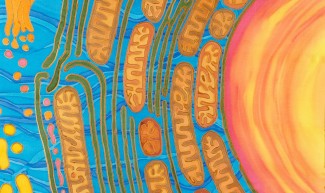
Damage to the myelin sheath characteristic of demyelinating diseases. Credit: Adobe Stock.
Sources
Gacem, A., et al. In silico screening and preclinical validation identifies bavisant as therapeutic candidate for multiple sclerosis. Science Translational Medicine. Janvier 2026. DOI : 10.1126/scitranslmed.ads0
 Multiple Sclerosis: Identification of a Molecule that Promotes Repair of the Nervous System
Find the press release for this news item
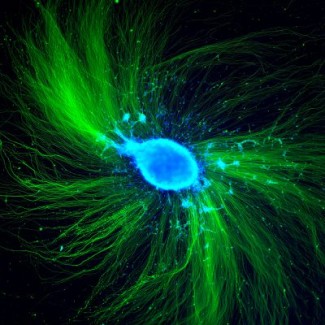
The team "Repair in demyelinating diseases: from biology to clinical translation" is interested in the mechanisms of myelin repair in the brain and spinal cord in multiple sclerosis and demyelinating diseases.
Read more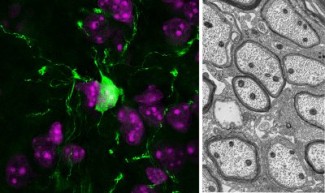
Multiple Sclerosis (MS)
Multiple sclerosis (MS) is the second leading cause of acquired disability in young adults, after injury. It affects 120,000 people in France today, with 3,000 new cases diagnosed each year. This makes it a major public health issue, since it also...
Read more