Or 34,00 After 66% tax deduction

I make a monthly donation I make an IFI donation
Research, science & health

Stéphanie BAULAC : winner of an erc consolidator grant

Last update: 22/09/2025 Reading time: 1 min
Stéphanie Baulac
Retour à la recherche

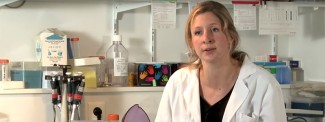
A specialist in genetics of epilepsy, Stephanie Baulac, co-responsible of the team "genetics and physiopathology of family epilepsies" at the Institut du Cerveau - ICM, is the winner of an ERC Consolidator Grant.

ERC Grants aim to support talented researchers with ambitious and innovative scientific projects.

Stéphanie Baulac's project objective is to understand the severity of focal epilepsies, the origin of the seizures being located in a specific area of the brain. And to answer the following questions : Is a second somatic mutation of DEPDC5 gene responsible for the severity or the location of the seizure ? Why are the seizures focal ? And which phenomenon is responsible for the location ?

This work will allow to diagnose precisely epilepsies in order to adapt the antiepileptic treatment. Moreover, the DEPDC5 gene is involved in an essential signalling pathway to growth and cell proliferation, mTOR.

The team's hope would be to validate a first model of the pathology, explain the mechanisms involved in epilepsies related to the mTOR pathway, and consider new therapeutic leads.

Our news on the subject

Stimuler les mitochondries pour doper la mémoire à long terme
Stimulating Mitochondria to Boost Long-Term Memory
An international team led by Jaime de Juan-Sanz at the Paris Brain Institute has shown that slightly increasing the metabolic capacity of neurons can enhance long-term memory in both fruit flies and mice. The study, published in Nature Metabolism...
02.24.2026 Research, science & health
Traitements anti-Alzheimer
Anti-Alzheimer Treatments: A Long-Term Beneficial Effect on Symptoms
There is currently no cure for Alzheimer's disease. The treatments available in France—which are not reimbursed—are known as symptomatic treatments, meaning that they act on the consequences of the disease rather than its underlying cause. In 2018...
02.19.2026 Research, science & health
État de mal épileptique
Status Epilepticus: New Insights Gained from National Health Data
The most severe form of epilepsy, status epilepticus is a high-risk neurological emergency. Yet its epidemiology remains poorly understood, particularly in France. By analyzing data from the French National Health Insurance system, compiled within...
02.19.2026 Research, science & health
Sclérose en plaques : identification d’une nouvelle molécule favorisant la remyélinisation
Multiple Sclerosis: Identification of a Molecule that Promotes Repair of the Nervous System
A molecule previously studied in the context of sleep disorders and attention deficit hyperactivity disorder (ADHD) is now, for the first time, revealing its potential in experimental models of multiple sclerosis (MS): it protects neurons and...
01.27.2026 Research, science & health
VignetteActu WBHF 2026
World Brain Health Forum 2026
More than one in three people will experience a brain disorder at some point in their lives. This reality, identified by the World Health Organization as a major public health priority, calls for unprecedented international mobilization. It is...
01.12.2026 Events
Une nouvelle approche pour évaluer les patients en état de conscience altérée
A New Approach to Assessing Patients with Disorders of Consciousness
In intensive care units, some patients who appear unconscious occupy a gray zone in their relationship to the world. To better diagnose them and predict their recovery potential, Dragana Manasova, Jacobo Sitt, and their colleagues have developed an...
01.08.2026 Research, science & health
See all our news