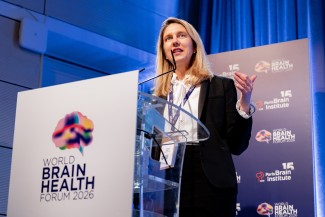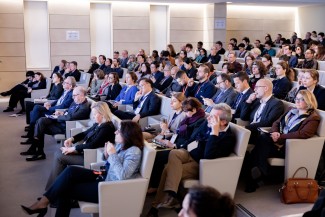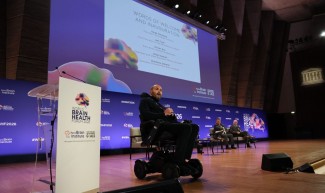
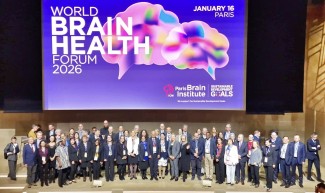
In January 2026, Paris Brain Institute organized the World Brain Health Forum, an international event that was at the heart of its 15th anniversary celebrations. Over three days, from January 14 to 16, around 80 international speakers and more than 1,000 participants gathered in Paris at Paris Brain Institute, UNESCO House and the Academy of Sciences to reflect, debate and lay the foundations for collective action to prioritize brain health. The event was a major turning point in how brain health is viewed globally.
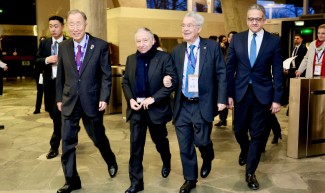
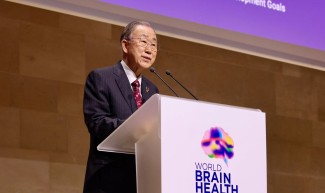
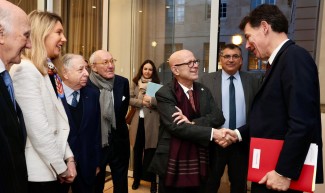
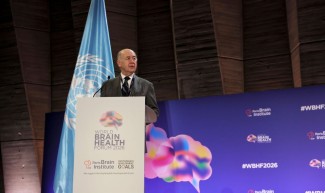
On January 15 at UNESCO, the Forum welcomed a wide range of world-renowned scientists, policymakers, politicians, representatives from international institutions, key private sector players and government bodies. High-level speakers included His Excellency Ban Ki-moon, the 8th United Nations Secretary-General, Dr. Tedros Adhanom Ghebreyesus, Director-General of the World Health Organization, Khaled El-Enany, UNESCO Director-General, and many distinguished international researchers and experts.
Their inaugural lectures shared the conviction that brain health can no longer be viewed as a strictly medical or scientific challenge. Brain health is one of our great contemporary challenges, affecting public health, economic development, social cohesion and the sustainability of our societies. As reiterated by Serge Weinberg, President of Paris Brain Institute, during his welcome address, “the brain is our greatest asset in society: our greatest asset for education, work, innovation, and, increasingly, economic sustainability”.
Putting brain health on the agenda
The figures cited during the Forum have highlighted the scale of the challenge. In Europe, around 165 million people are currently living with a neurological or psychiatric disorder, at an estimated cost of 800 billion euros per year to health systems and social welfare systems. Globally, more than one third of the population will be affected by a brain condition in their lifetimes, yet investments in research and innovation do not match the human, social and economic impact of these conditions.
The World Brain Health Forum brought together a wide range of disciplinary perspectives, from basic neurosciences to public health, artificial intelligence, prevention policies, health economics and equity issues. The talks highlighted a two-fold trend: on the one hand, an unprecedented acceleration in scientific knowledge and technological tools; and, on the other, heightened political and societal awareness that still does not reflect the magnitude of the needs.
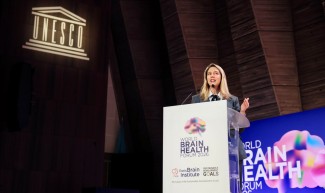
In her speech, the Executive Director of Paris Brain Institute, Prof. Stéphanie Debette, argued that “we now have the scientific and technological tools to radically transform our understanding, prevention and care of brain diseases, but these advances will only have a real impact if they are part of collective, coordinated strategies that are supported internationally”. She stressed the importance of strengthening links between research, care, innovation and public policies, to uncover concrete and equitable responses to the challenges of brain health.
A milestone
The Forum program on January 16 marked a milestone in this ambition, with the development of a “Framework for action for Brain Health” designed to build shared recommendations for governments, international institutions and commercial players. This framework for reflection aims for better coordination between research, care, innovation and public policy, with a focus on prevention, equitable access to diagnosis and treatment, and lasting investment in brain health.
Beyond the event itself, the World Brain Health Forum laid the foundations for a collective movement founded on a simple but central idea: brain health must become a global priority on the same level as major environmental, educational and climate issues. As said by His Excellency Ban Ki-moon in his speech, “ensuring that every person, in every country, has the opportunity to reach their full cognitive, emotional and social potential is one of the essential conditions for human progress in the twenty-first century”.
All the videos from the event can be found in our dedicated YouTube event playlist.
Click here