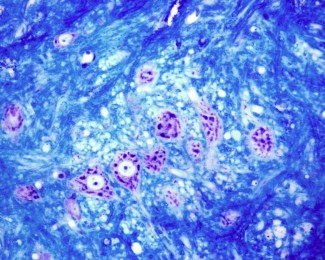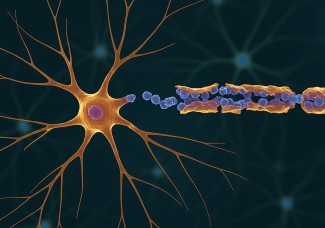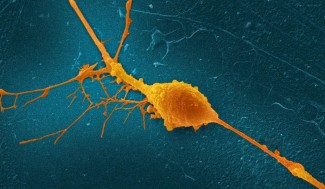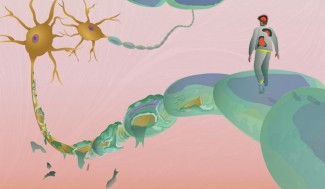
A molecule that has previously been studied in sleep disorders and attention deficit disorders with and without hyperactivity is revealing its potential for the first time in experimental models of multiple sclerosis (MS): it protects neurons and promotes myelin repair. Published in Science Translational Medicine, the new study shows that Bavisant targets two of the main mechanisms of the disease – nerve fiber degeneration and failure of the remyelination process – and may be a future drug candidate.
Multiple Sclerosis: a disease that attacks myelin
Multiple sclerosis is a demyelinating inflammatory disease. This means that it causes progressive destruction of myelin, a protective sheath that surrounds nerve fibres in the brain and spinal cord.
This sheath is produced by cells called oligodendrocytes and serves two essential functions. On the one hand, it allows rapid and efficient transmission of nerve impulses. On the other hand, it protects axons – the extensions of neurons – from degeneration.
When myelin disappears, demyelination plaques appear in the central nervous system. This progressive loss disrupts communication between neurons and may eventually lead to the destruction of the nerve fibres themselves.
Progressive forms marked by neurodegeneration
During the course of multiple sclerosis, some patients develop so-called progressive forms. In these cases, the loss of myelin is accompanied by a process of neurodegeneration, i.e. a progressive and irreversible deterioration of the neurons.
This phase is particularly difficult to treat, as it no longer relies solely on inflammation, but also on the structural loss of nerve cells. That’s why current research is focusing on mechanisms to repair myelin and protect neurons.
Innovative strategy to identify new treatments
The research team led by Brahim NAIT OUMESMAR at the Brain Institute has developed an innovative approach to accelerate the discovery of new therapies. Rather than creating new molecules from scratch, researchers have chosen to work with molecules that already exist, are in clinical use or are being tested for other diseases.
This process, called therapeutic repositioning, saves precious time in the development of new treatments.
To identify the most promising molecules, scientists have implemented a high-throughput screening method that combines several levels of analysis. Initially, artificial intelligence tools were used to predict the remyelinating and neuroprotective properties of the molecules. These results were then tested in different experimental models, ranging from human cell cultures to preclinical models of disease.
Bavisant: a promising molecule
Using this multi-scale approach, the researchers identified 32 molecules of interest that could help repair myelin and protect neurons. Of these, one molecule stood out: Bavisant.
Initially developed to treat sleep disorders and attention deficit hyperactivity disorder, Bavisant acts as an H3 receptor antagonist. In preclinical models of multiple sclerosis, it has shown several beneficial effects.
On the one hand, it stimulates remyelination, that is, the reconstruction of the myelin sheath around the nerve fibres. On the other hand, it exerts a neuroprotective effect, limiting damage to neurons. Finally, it also helps to reduce inflammation, a key factor in the progression of the disease.
Towards new clinical trials
The results obtained by the researchers show that Bavisant could become a major drug candidate to treat progressive forms of multiple sclerosis.
The next step is to confirm these effects in humans. Scientists plan to launch a Phase 2 clinical trial to evaluate the efficacy and safety of this molecule in patients.
This is particularly encouraging, as treatment options for progressive forms of the disease remain limited.
Multiple Sclerosis (MS)
Multiple sclerosis (MS) is the second leading cause of acquired disability in young adults, after injury. It affects 130,000 people in France today, with 5,000 new cases diagnosed each year. This makes it a major public health issue, since it also...
Read more
The team "Repair in demyelinating diseases: from biology to clinical translation" is interested in the mechanisms of myelin repair in the brain and spinal cord in multiple sclerosis and demyelinating diseases.
Read more