
Press Room
Resources dedicated to journalists and media professionals
The PR department responds to all media requests for information on scientific, medical, technological and entrepreneurial activities at Paris Brain Institute.
It disseminates new results from research teams and connects journalists to a relevant expert to comment on a current issue.
Feel free to contact our press officer to help you develop a topic that relies on state-of-the-art knowledge in neuroscience, neurology or psychiatry.
Press contact
Marie Simon
Email
:
presse@icm-institute.org
Our press documents
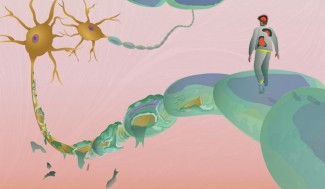
What if the biological mechanisms that cause multiple sclerosis were triggered years before clinical diagnosis? This is what a team at Paris Brain Institute suggests in a new study published in Neurology. The researchers show that, on a population...
12.06.2023
Research, science & health
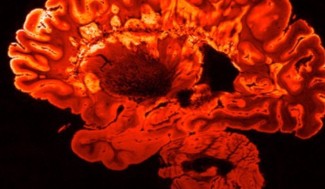
The Brain Fund, a private equity co-investment fund, aims to secure sustainable funding for Paris Brain Institute to support its research teams’ projects and drive the development of new treatments for nervous system disorders. Managed by the Impact...
10.30.2023
Support
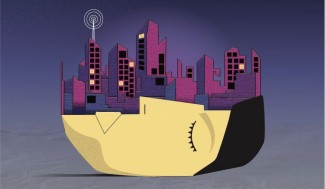
Sleep is not a state in which we are completely isolated from our environment: while we sleep, we are capable of hearing and understanding words. These observations, the result of close collaboration between teams at Paris Brain Institute and the...
10.12.2023
Research, science & health

In recent years, interest in psychedelics and their possible benefit in treating psychiatric illnesses has been revived. Expectations are high, especially in obsessive-compulsive disorder, where patients’ therapeutic options are still limited. At...
10.11.2023
Research, science & health

“ Think of a white sandy beach on a paradise island. Can you see it?” The ability to visualize a place, object, or place on request varies significantly between individuals. But some people cannot conjure up mental images at all: this trait is known...
09.08.2023
Research, science & health
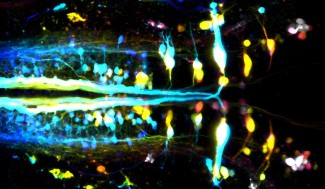
Paris, September 4th, 2023. Walking is a complex mechanism involving both automatic processes and conscious control. Its dysfunction can have multiple, sometimes extremely subtle causes, within the motor cortex, brain stem, spinal cord, or muscles...
09.04.2023
Research, science & health

Is paying attention to the things around us necessary to perceive them? This seemingly simple question is far from having a consensual answer. To decide between the various existing hypotheses, Jianghao Liu and his colleagues at Paris Brain Institute...
09.02.2023
Research, science & health

The more we like our ideas, the faster we give them shape. But to be creative, you have to have a penchant for ideas that are out of the ordinary… This is what Alizée Lopez-Persem and Emmanuelle Volle, Inserm researchers at Paris Brain Institute...
08.14.2023
Research, science & health

Assessing a number of elements, whether individuals in a group, twigs in a nest, or fruit on a branch, is an essential skill in many animals. But the neural circuits on which it is based are still poorly understood. To remedy this lack of knowledge...
07.14.2023
Research, science & health
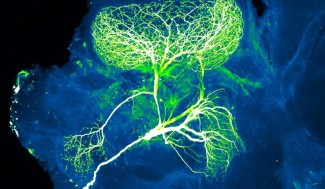
To adapt to the small and large events that give the world its ever-changing character, we use an essential ability: cognitive flexibility. It enables us to improvise in the event of disruptions on our morning commute, to cope with the unexpected...
06.28.2023
Research, science & health
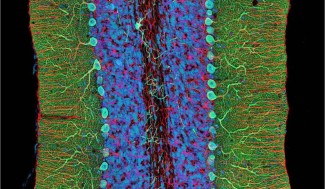
Spinocerebellar ataxias are a very heterogeneous group of inherited diseases associated with degeneration of the cerebellum – a region at the back of the skull that plays an essential role in motor control. Patients have gait and balance disorders...
06.21.2023
Research, science & health
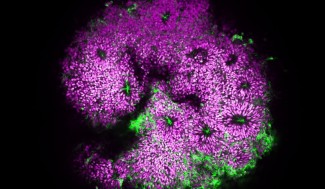
What if Alzheimer’s disease left its mark on the embryo? Khadijeh Shabani and her colleagues from the “Brain Development” team led by Bassem Hassan (Inserm) at Paris Brain Institute show that the amyloid precursor protein (APP) has a specific...
06.19.2023
Research, science & health
Our useful documents
News that might interest you

What if the risk of developing Alzheimer’s disease could be assessed with an EEG? Pierre Champetier and his colleagues in the DreamTeam think the idea is worth taking seriously. In a study published in Alzheimer’s & Dementia, the team shows that slow...
09.07.2026
Research, science & health
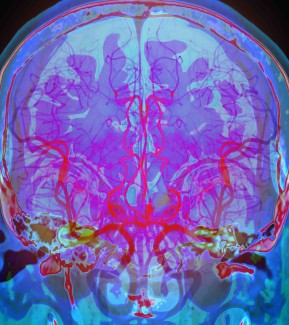
Sometimes, doctors cannot find the cause of intracranial hypertension, a syndrome characterized by excess pressure inside the skull. Patients’ symptoms are effectively relieved by a procedure that dilates a vein in the brain… yet no one truly...
07.22.2026
Research, science & health
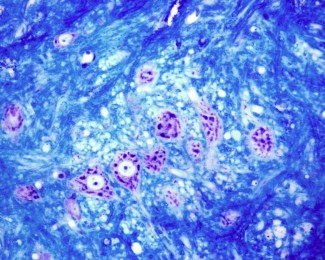
The number of patients living with neurodegenerative diseases that affect movement is rising steadily across Europe. Yet a large-scale study from the Paris Brain Institute and the Karolinska Institutet in Stockholm shows that this is not an emerging...
06.08.2026
Research, science & health
The European CURE-ND alliance has announced the launch of CURE-ND4ALS, an ambitious, patient-focused initiative that seeks to tackle amyotrophic lateral sclerosis (ALS). The program is supported by Fonds Invincible Été, a philanthropic fund...
05.29.2026
Institutional
For decades, cell biology has built its approach around the study of genes and molecules, pushing the physical forces that sculpt our tissues into the background. Today, an international consortium, coordinated by Fanny Mochel at the Paris Brain...
05.26.2026
Research, science & health

We tend to take for granted that the thoughts associated with sleep have a particular quality: we often describe them as elusive, abstract, or marked by a certain strangeness. Yet a study conducted by researchers from the DreamTeam at the Paris Brain...
04.29.2026
Research, science & health